
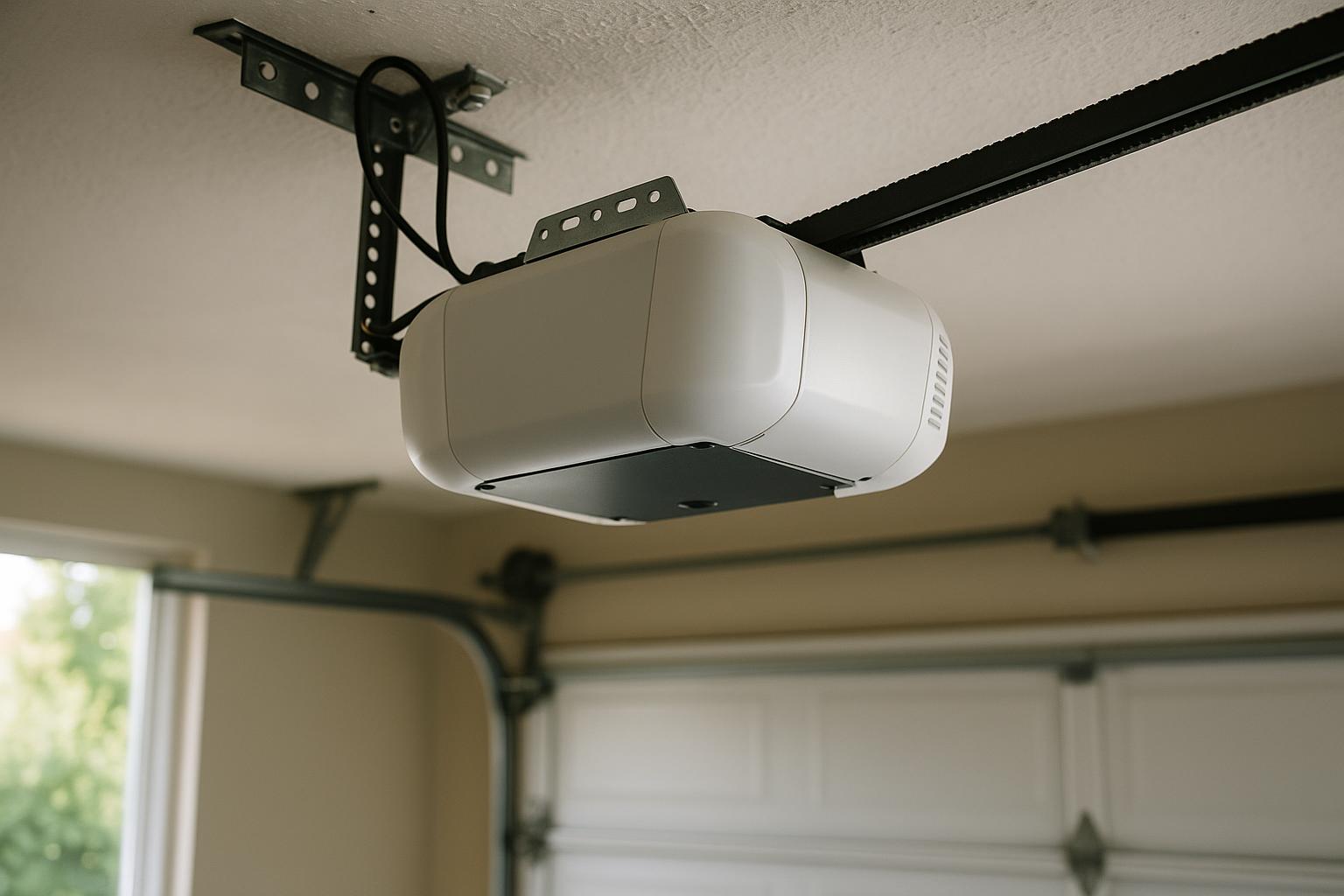
Your Garage Door Opener Is Trying to Tell You Something
Most homeowners in Lafayette don't think much about their garage door opener until it stops working entirely. But like any mechanical device, your opener gives off warning signs long before it fails completely. Catching those signs early can save you from getting locked out of your garage on a busy morning or dealing with a security risk you didn't see coming.
Garage door openers typically last between 10 and 15 years, depending on the brand, usage, and how well they've been maintained. If yours is getting up there in age or acting a little off, here are five signs it might be time for a replacement.
1. It Operates Inconsistently or Intermittently
Does your garage door open sometimes but not others? Maybe you press the remote and nothing happens, then it works fine on the second or third try. Intermittent operation is one of the most common early signs that your opener is on its way out.
This can be caused by a few things — worn-out internal gears, a failing circuit board, or degraded wiring. While a professional can sometimes repair individual components, if the opener is older and the problems keep recurring, replacement is usually the smarter long-term investment.
What to check first
- Replace the batteries in your remote to rule out a simple fix.
- Make sure the wall-mounted control panel responds. If it does but the remote doesn't, the issue might be the remote itself.
- If both the remote and wall panel are unreliable, the opener's motor or logic board is likely the problem.
2. It's Excessively Slow
If your garage door has started moving noticeably slower than it used to, that's not just an annoyance — it's a sign that the motor is struggling. Over time, internal components wear down and lose efficiency. A healthy opener should raise or lower the door at a steady, consistent speed.
Some slowdown can be caused by track issues, lack of lubrication, or spring problems, so it's worth having a technician in Lafayette take a look before assuming the opener is the culprit. But if the mechanical components are in good shape and the door still crawls, the opener motor is likely wearing out.
3. It Vibrates or Shakes Excessively During Operation
A certain amount of vibration is normal for any motorized device. But if your garage door opener is shaking hard enough to rattle the mounting bracket or make the ceiling vibrate, something is wrong internally. This usually points to worn-out gears, an unbalanced motor, or failing internal supports.
Excessive vibration doesn't just mean the opener is struggling — it can also loosen the hardware that holds the unit to your ceiling over time, which creates a safety hazard. If you notice this kind of shaking, don't ignore it. Have it inspected sooner rather than later.
4. It Lacks Modern Safety Features
If your garage door opener was installed before 1993, it almost certainly lacks the safety features that are now required by federal law. Specifically, all garage door openers sold after January 1, 1993, are required to have an auto-reverse mechanism that stops and reverses the door if it contacts an object while closing.
Many older openers also lack photoelectric sensors — those small sensors mounted near the floor on either side of the door that detect objects in the door's path. These features exist to protect children, pets, and anyone who might be near the door during operation.
Safety features to look for in a modern opener
- Auto-reverse mechanism: The door reverses when it hits an obstruction.
- Photoelectric sensors: Infrared beams detect objects in the door's path before contact is made.
- Rolling code technology: The remote generates a new code each time it's used, preventing code theft.
- Manual release handle: Allows you to open the door manually during a power outage.
- Timer-to-close: Automatically closes the door after a set period if you forget.
If your current opener is missing these features, upgrading isn't just about convenience — it's about keeping your family safe. Homeowners across Macon County who still have older units should seriously consider making the switch.
5. It's Simply Too Old
Even if your garage door opener seems to be working fine, age alone can be a good reason to replace it. Openers that are 12 to 15 years old are living on borrowed time. The motor, gears, and electronics all degrade with use, and replacement parts for older models can be difficult or expensive to find.
Newer openers are also significantly quieter, more energy-efficient, and come with smart home integration options that many Lafayette homeowners appreciate. Belt-drive openers, for example, operate almost silently compared to the chain-drive models that were standard a decade ago. Many new units also connect to your smartphone, letting you monitor and control your garage door from anywhere.
Benefits of upgrading to a new opener
- Quieter operation, especially with belt-drive models
- Smartphone connectivity and smart home compatibility
- Improved security with rolling code technology
- Better energy efficiency with DC motors
- Battery backup systems that keep the door working during power outages
Choosing the Right Replacement Opener
If you've decided it's time for a new garage door opener, you'll want to consider a few factors before making a purchase. The right opener depends on the size and weight of your door, how often you use it, and what features matter most to you.
Types of garage door openers
- Chain-drive: Affordable and durable, but the loudest option. Good for detached garages.
- Belt-drive: Quiet and smooth. Ideal for attached garages where noise travels into living spaces.
- Screw-drive: Fewer moving parts and low maintenance, but moderate noise levels.
- Wall-mount (jackshaft): Mounts on the wall beside the door, freeing up ceiling space. Great for garages with low ceilings or storage needs.
Horsepower matters too. A standard single-car door usually needs a 1/2 HP motor, while heavier double doors or insulated doors may require 3/4 HP or more. A technician can help you match the right motor to your specific door.
When to Call a Professional in Lafayette
Replacing a garage door opener isn't a typical weekend DIY project. It involves electrical wiring, precise mounting, and proper calibration of safety sensors and force settings. An improperly installed opener can damage your door, void your warranty, or create a serious safety risk.
At Lafayette Garage Door, we help homeowners throughout Lafayette, Red Boiling Springs, Westmoreland, and the surrounding areas choose and install the right opener for their needs. We'll assess your current setup, recommend the best option for your door and budget, and make sure everything is installed correctly and safely.
If your garage door opener is showing any of the signs above — or if it's simply been a long time since it was replaced — give us a call. We'll take a look and give you an honest recommendation, whether that's a simple repair or a full replacement.