
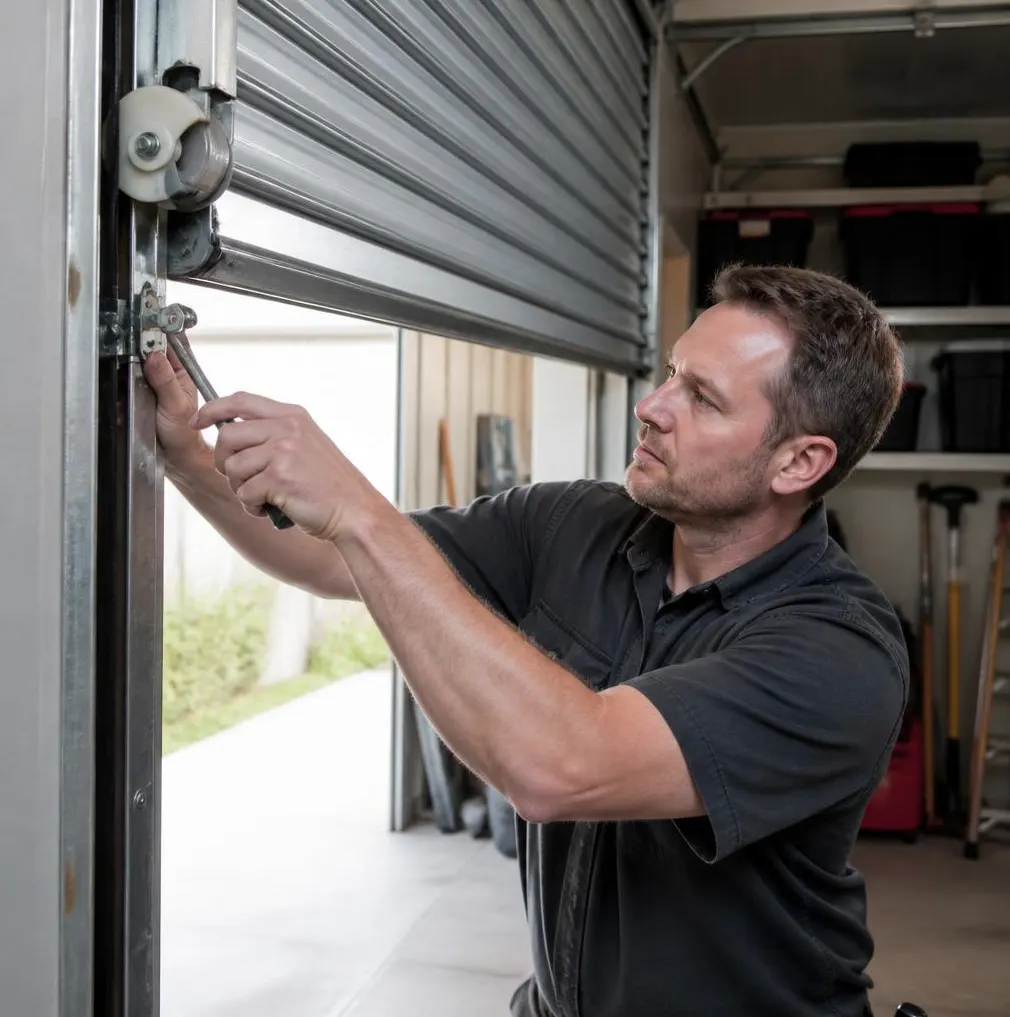
What Waiting Another Season Actually Costs You
A noisy garage door rarely gets better on its own, and in Macon County's climate it usually gets worse fast. Humidity swells wood jambs and rusts hardware over the summer, heavy rain pushes moisture into tracks and bearings, and the first hard freeze or ice storm this winter will make stiff, under-lubricated parts seize or snap. A noise you've been living with since August is often a part that's already 80% worn. Ignore it through another season of temperature swings and you're more likely to end up with a dead spring, a door stuck in the open or closed position, or a cable that snaps under load — all of which cost more, and are far less convenient, than fixing the noise now.
Grinding
Grinding sounds like metal scraping metal, usually in a steady rhythm that matches the door's movement up or down. It's often loudest in the middle of the travel, not at the very top or bottom.
What a technician checks, in order
- Rollers first. Nylon rollers wear flat or crack, and steel rollers lose their bearings over time, especially with the grit and pine debris that collects in tracks around wooded properties. A worn roller grinding against the track is the single most common cause, and replacement is straightforward.
- Bearings in the rollers or opener. If the rollers look fine, the bearings inside them — or inside the opener's drive assembly — may be dry or pitted from rust. These get repacked or replaced.
- Track alignment. If rollers and bearings check out, the track itself may be bent or pulling away from the wall, forcing metal against metal. This requires realigning or replacing the track section, which is a bigger job but usually not a full door replacement.
Squealing
Squealing is a higher-pitched, often intermittent sound, sometimes described as a dry hinge or a sneaker on a gym floor. It tends to show up or worsen after long stretches without maintenance.
What a technician checks, in order
- Lubrication first. Hinges, rollers, and the torsion spring itself dry out, especially after a humid summer followed by drier fall air. This is the cheapest and most common fix — a proper garage-door-rated lubricant applied to hinges, rollers, and springs, not household oil, which attracts dust and grime.
- Worn rollers. If lubrication doesn't quiet things down within a cycle or two, the rollers themselves may be worn enough that metal or dry nylon is rubbing against the track regardless of lubricant.
- Spring friction. A torsion spring with worn coils can squeal as it expands and contracts. If the squeal is near the top of the door where the spring sits, this is often the real source, and it's a sign the spring is approaching the end of its life.
Popping
Popping is a sharp, single sound — sometimes one loud pop, sometimes a series of smaller cracks — and it can happen whether or not the door actually moves afterward. This is the noise that deserves the most caution.
What a technician checks, in order
- Spring tension first, and this one isn't a DIY check. A loud pop followed by the door feeling heavier, uneven, or unresponsive often means a torsion spring has lost tension or cracked. Springs are under enormous force and should only be inspected or replaced by someone trained to handle them.
- Track obstructions or bent sections. A smaller, repeated popping sound as the door travels can mean a section of track has a dent or kink that the rollers are jumping over. This gets straightened or swapped out.
- Panel flexing from temperature swings. Metal panels expand and contract with daily temperature changes, and a quick cold snap after a warm, humid stretch can cause an audible pop as panels settle. If this is the cause, it's usually harmless, but it's worth ruling out the spring first rather than assuming it's just the weather.
Rattling
Rattling is a looser, shakier sound, often most noticeable right as the door starts or stops moving. It tends to come from somewhere that's come loose rather than something that's worn down.
What a technician checks, in order
- Loose hardware first. Bolts, brackets, and hinge screws work themselves loose over thousands of open-close cycles, and vibration from the opener accelerates it. Tightening everything to spec often solves this in one visit.
- Worn chain or belt in the opener. A chain-drive opener with a stretched or slack chain will rattle against its rail, especially noticeable right after the door starts moving. This is usually a tension adjustment or a chain replacement.
- Loose track mounting. If hardware and the opener check out, the brackets holding the track to the wall or ceiling may have loosened, letting the whole track vibrate. This gets re-secured to the framing.
When to Call Lafayette Garage Door
If you've matched your noise to a cause above and it points to anything involving the spring, the opener's internal drive, or a track that needs realignment, that's the point to call in a technician rather than keep testing it yourself. Our Garage Door Repair service covers diagnosing and fixing all four of these noise types, and if your door hasn't had a tune-up in a while, our Preventive Maintenance visit includes lubrication, hardware tightening, and a full spring and roller inspection before winter weather puts more strain on worn parts.
If your garage door in Lafayette, TN or anywhere in Macon County has started making noise, give Lafayette Garage Door a call before the next cold snap makes the problem worse.