
Your Garage Door Springs Are Doing More Work Than You Think
Every time you open and close your garage door, a set of heavy-duty springs does the real heavy lifting. Your garage door likely weighs between 150 and 400 pounds, and without properly functioning springs, your opener alone can't handle that load. Springs are under enormous tension, and over time, they wear out. For homeowners in Lafayette, TN, understanding when and why to replace garage door springs can save you from unexpected breakdowns, costly damage, and even dangerous situations.
At Lafayette Garage Door, spring replacement is one of the most common service calls we handle across Macon County. Let's walk through everything you need to know about garage door spring lifespan, warning signs, and replacement.
How Long Do Garage Door Springs Last?
Most standard garage door springs are rated for approximately 10,000 cycles. One cycle equals one full open and one full close. That might sound like a lot, but consider how often you use your garage door each day.
- 2 cycles per day (once out, once in): Springs last roughly 13-14 years
- 4 cycles per day (common for busy families): Springs last roughly 7 years
- 6-8 cycles per day (home businesses, multiple drivers): Springs may last only 4-5 years
Weather also plays a role. Here in Lafayette, we experience cold winters and hot summers. Temperature swings cause the metal in springs to expand and contract repeatedly, which can accelerate wear. If your garage isn't insulated, your springs may fatigue faster than average.
Torsion Springs vs. Extension Springs
There are two main types of garage door springs, and their lifespans differ slightly:
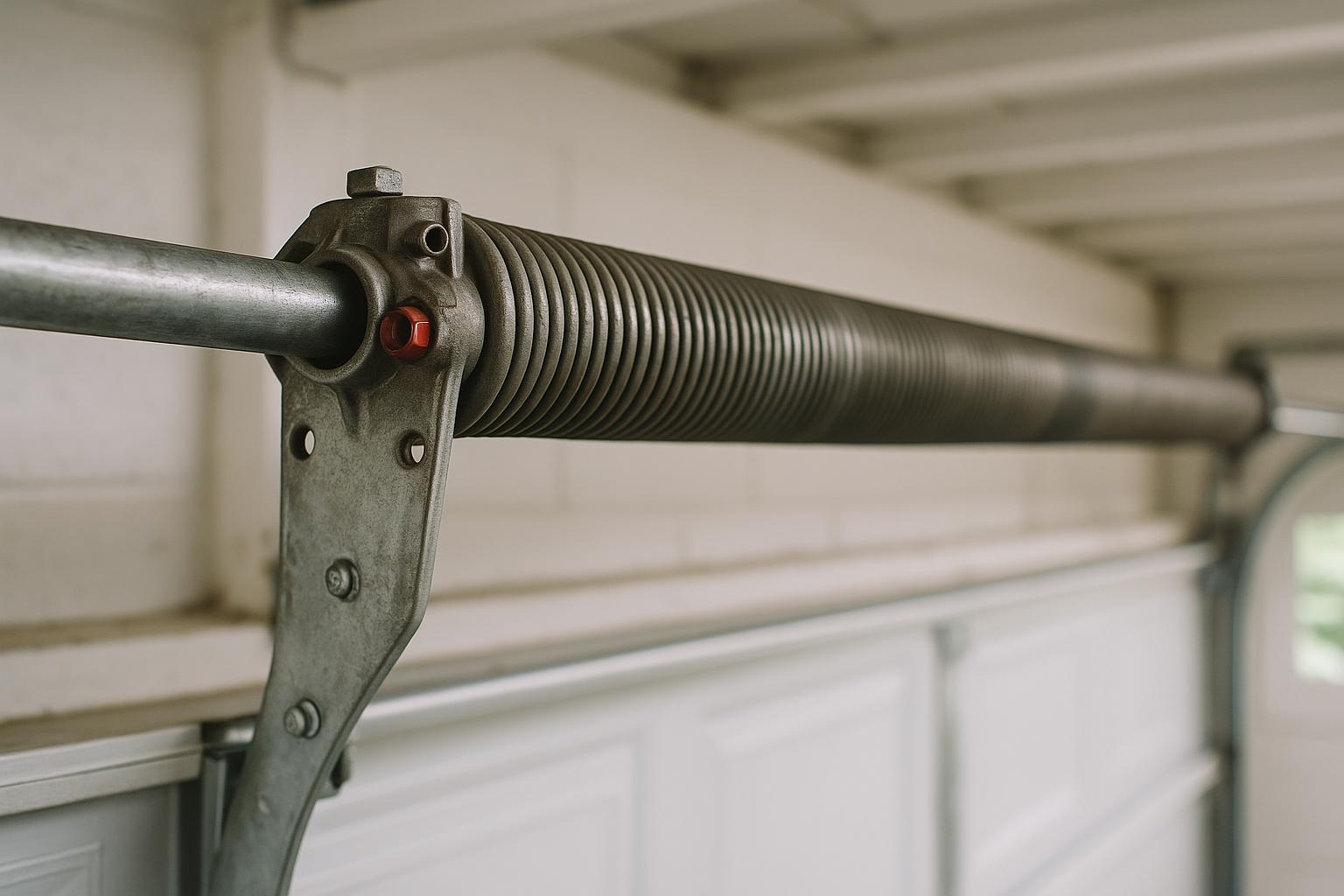
- Torsion springs mount horizontally above the garage door opening. They're the more common and durable option, typically lasting the full 10,000 cycles or more. High-cycle torsion springs rated for 25,000 or even 50,000 cycles are available for homeowners who want a longer-lasting solution.
- Extension springs run along the horizontal tracks on either side of the door. They tend to wear out a bit faster and are generally considered less safe because they can become projectiles if they snap without safety cables in place.
If you're not sure which type your garage door uses, a quick inspection from a professional can tell you. We're happy to take a look for any homeowner in the Lafayette or Red Boiling Springs area.
Warning Signs Your Springs Need Replacement
Springs rarely fail without giving you some advance notice. Here are the most common signs that your garage door springs are nearing the end of their life:
1. The Door Feels Heavier Than Usual
Try disconnecting your opener by pulling the emergency release cord, then manually lift the door. A properly balanced garage door should feel relatively light and stay open about three or four feet off the ground on its own. If the door feels extremely heavy or slams shut the moment you let go, your springs have lost tension and need attention.
2. The Door Opens Unevenly or Crooked
If one spring is weaker than the other, or if one has already broken, the door may rise unevenly. You might notice one side lifting faster than the other, or the door may get stuck partway up. This puts extra strain on your opener and tracks, which can lead to more expensive repairs down the road.
3. Visible Gaps in the Spring
A broken torsion spring will have a visible gap where the coil has separated. This is the clearest sign of a break. If you see this, do not attempt to operate the door. A broken spring means the full weight of the door is unsupported, creating a serious safety hazard.
4. The Opener Struggles or Stops Working
When springs lose their lifting power, your garage door opener has to compensate. You may notice the motor straining, the door reversing partway up, or the opener stopping entirely. Many homeowners assume the opener itself has failed when the real culprit is a worn spring.
5. It's Been More Than 7-10 Years
If you've been in your home for a decade or more and have never had the springs replaced, it's worth scheduling an inspection even if everything seems fine. Preventive replacement is far less stressful than dealing with a spring that snaps while you're heading to work on a Monday morning.
Why You Shouldn't Replace Garage Door Springs Yourself
We understand the DIY spirit is strong in communities like Lafayette, Westmoreland, and Hartsville. Many homeowners are handy and capable of tackling all kinds of projects. But garage door springs are one job we strongly recommend leaving to a trained professional.
Here's why:
- Extreme tension: Torsion springs are wound under tremendous force. A spring that releases unexpectedly can cause severe injury or even death.
- Specialized tools required: Proper spring replacement requires winding bars, clamps, and other tools that most homeowners don't have on hand.
- Balancing matters: Springs must be precisely calibrated to the weight of your specific door. An improperly tensioned spring will cause uneven wear, opener strain, and premature failure.
- Warranty considerations: Many garage door and opener warranties are voided if non-professional work is performed on the system.
A professional spring replacement typically takes less than an hour and gives you peace of mind that the job was done safely and correctly.
Should You Replace One Spring or Both?
This is one of the most common questions we hear. If only one spring has broken, is it worth replacing both?
Our recommendation: yes, replace both springs at the same time.
If one spring has broken or worn out, the other one is the same age and has endured the same number of cycles. It's likely very close to failing as well. Replacing both springs together saves you from paying for a second service call in a few weeks or months, and it ensures your door is balanced evenly with matching spring tension on both sides.
What Does Spring Replacement Cost?
The cost of garage door spring replacement varies depending on the type of springs, the size and weight of your door, and whether any additional components need attention. In general, most homeowners in the Lafayette area can expect spring replacement to be one of the more affordable garage door repairs. It's significantly less expensive than replacing an entire door or opener, and it's a fraction of the cost of repairing damage caused by a door that falls due to a broken spring.
When you call Lafayette Garage Door, we provide upfront pricing before any work begins. No surprises, no hidden fees.
Keep Your Springs Lasting Longer
While springs will eventually wear out no matter what, a little maintenance can extend their life:
- Lubricate your springs two to three times per year with a silicone-based garage door lubricant. This reduces friction and prevents rust.
- Schedule annual maintenance so a technician can inspect spring tension, check for wear, and catch small problems before they become big ones.
- Keep your door balanced. If you notice any signs of imbalance, address them promptly to prevent uneven spring wear.
We're Here When You Need Us
Whether your spring just snapped this morning or you're planning ahead with preventive maintenance, Lafayette Garage Door is ready to help. We serve homeowners and businesses throughout Lafayette, Red Boiling Springs, Westmoreland, Hartsville, Scottsville, and Portland with honest, dependable service.
Give us a call to schedule a spring inspection or replacement. We'll show up on time, explain exactly what's needed, and get your garage door working safely again.