
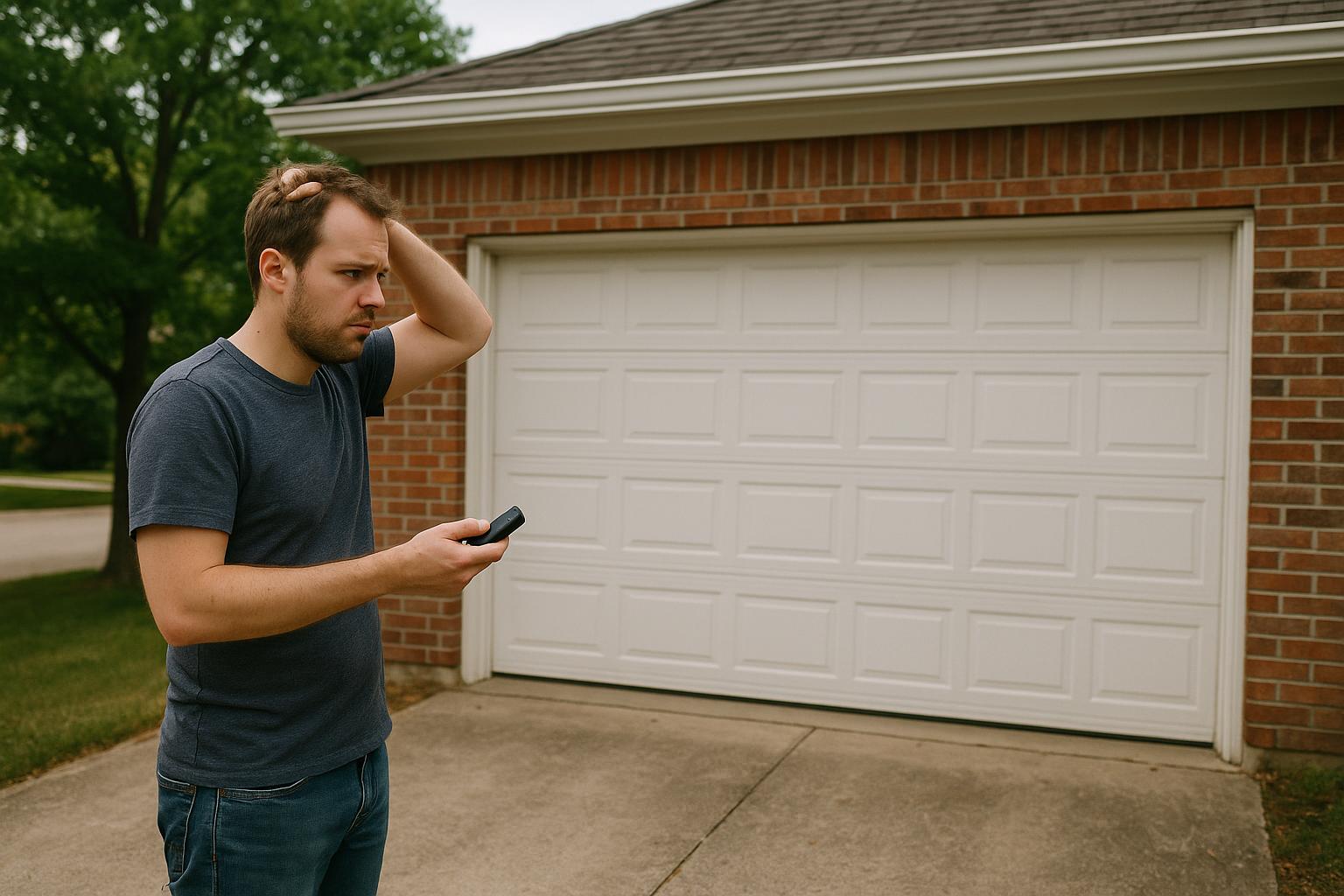
A Stuck Garage Door Is More Than an Inconvenience
You're running late for work, you press the button on your remote, and nothing happens. Or maybe your garage door starts to close and then reverses for no apparent reason. Few household problems are as immediately frustrating as a garage door that refuses to cooperate.
For homeowners in Lafayette, TN and the surrounding Macon County area, a malfunctioning garage door isn't just an annoyance — it can be a security risk, a safety hazard, and a major disruption to your daily routine. The good news is that many common causes have straightforward solutions. In this guide, we'll walk you through the most likely reasons your garage door won't open or close and help you decide when it's something you can handle yourself versus when it's time to call a professional.
Check the Obvious First
Before you start worrying about expensive repairs, take a moment to rule out the simplest explanations. You'd be surprised how often the fix is something basic.
- Dead remote batteries: This is the number one reason people think their garage door opener has failed. Swap out the batteries in your remote and try again.
- The opener is unplugged: It happens more often than you'd think, especially after a power outage or if someone has been working in the garage. Check that the motor unit is plugged into the outlet on the ceiling.
- The wall switch: If the remote doesn't work but the wall switch does, the issue is with the remote or the antenna on the opener unit. If neither works, the problem is likely with the opener itself or the power supply.
- The lock mode is engaged: Some garage door openers have a lock feature that disables the remote. Check your wall-mounted control panel to see if the lock button has been accidentally pressed.
Inspect the Safety Sensors
Every modern garage door opener is equipped with photoelectric safety sensors — small devices mounted near the floor on either side of the door opening. These sensors send an invisible beam across the doorway, and if anything breaks that beam, the door won't close. This is a critical safety feature designed to prevent the door from closing on a person, pet, or object.
If your garage door opens fine but refuses to close, or if it starts closing and then reverses, the sensors are the first thing to check.
- Alignment: The sensors need to be pointed directly at each other. Even a slight bump from a bicycle tire, a lawnmower, or a child playing can knock them out of alignment. Look for a steady green light on both sensors. A blinking light usually means they're misaligned.
- Obstructions: Remove anything that might be blocking the beam — boxes, tools, cobwebs, or debris.
- Dirty lenses: Wipe the sensor lenses with a clean, dry cloth. Dust, dirt, and spider webs can accumulate quickly, especially during Tennessee's warmer months.
- Sun interference: In some cases, direct sunlight hitting one of the sensors can overwhelm it and cause false readings. A small piece of cardboard fashioned into a shade can sometimes solve this issue.
Look at the Tracks and Rollers
Your garage door travels along metal tracks on either side of the opening. If those tracks are bent, misaligned, or obstructed, the door may get stuck partway or refuse to move at all.
What to look for:
- Visible bends or dents in the track, especially near the bottom where impacts are most common
- Gaps between the track and the rollers — the rollers should sit snugly inside the track
- Debris in the tracks such as leaves, small rocks, or hardened grease buildup
- Worn or broken rollers that are cracked, chipped, or no longer spinning freely
You can clean the tracks with a damp cloth and check for obvious damage yourself. However, if the tracks are significantly bent or the rollers need replacing, that's a job best left to a trained technician. Attempting to force a door along a damaged track can cause further damage and create a dangerous situation.
The Disconnect Switch May Be Engaged
Every garage door opener has a manual disconnect feature — usually a red cord or handle hanging from the opener rail. This is designed to let you operate the door by hand during a power outage. If this disconnect has been pulled and not properly re-engaged, your opener motor will run but the door won't move.
To re-engage it, simply pull the cord back toward the opener unit and then activate the opener with your remote or wall switch. The trolley should reconnect automatically. If you're not sure how your specific model works, check the owner's manual or give us a call — we're happy to walk you through it.
When the Problem Is the Opener Itself
If you've checked everything above and the door still won't cooperate, the issue may be with the garage door opener motor or its internal components. Signs that the opener is failing include:
- The motor hums or runs but the door doesn't move
- The opener activates intermittently or only works sometimes
- You hear clicking from the motor unit but nothing happens
- The opener's light blinks a specific number of times, indicating an error code
Garage door openers typically last 10 to 15 years, depending on usage and maintenance. If yours is getting up there in age and showing these symptoms, it may be more cost-effective to replace it rather than repair it. Newer models are quieter, more energy-efficient, and come with features like smartphone connectivity and battery backup.
Don't Ignore a Door That's Off Its Tracks
If your garage door has come off its tracks entirely, do not attempt to fix this yourself. A standard residential garage door weighs between 150 and 250 pounds, and the tension in the cables and springs makes working on a derailed door extremely dangerous without proper tools and training.
This is one of the most common emergency calls we get from homeowners in Lafayette and nearby communities like Red Boiling Springs and Westmoreland. If your door is off-track, keep everyone away from it and call a professional right away.
Preventive Steps to Avoid Future Problems
Many garage door failures are preventable with a little routine attention. Here are a few simple habits that can save you from unexpected breakdowns:
- Lubricate moving parts every six months with a silicone-based garage door lubricant. Focus on the rollers, hinges, and springs.
- Test the balance of your door by disconnecting the opener and lifting the door manually to about waist height. It should stay in place. If it falls or rises, the springs may need adjustment.
- Test the auto-reverse feature monthly by placing a block of wood on the ground in the door's path. The door should reverse immediately upon contact.
- Visually inspect the cables, springs, tracks, and hardware every few months for signs of wear or damage.
- Schedule annual professional maintenance to catch small issues before they become costly repairs.
When to Call Lafayette Garage Door
Some garage door issues are quick fixes you can handle on your own. But when you're dealing with broken springs, damaged tracks, opener malfunctions, or anything that involves the door's tension system, it's time to bring in a professional.
At Lafayette Garage Door, we serve homeowners and businesses throughout Lafayette, Hartsville, Scottsville, Portland, and the rest of the Macon County region. We show up on time, diagnose the problem honestly, and get your door working again as quickly as possible. If your garage door won't open or close and you've exhausted the basics, give us a call. We're your neighbors, and we're here to help.